We recommend a modest calorie deficit, filling meals, regular movement, and steady sleep habits to help you reduce belly fat with simple lifestyle changes. These habits support gradual fat loss while helping you keep muscle and protect your health.

Belly fat includes subcutaneous fat beneath the skin and visceral fat deeper inside the abdomen, around internal organs. Excess visceral fat raises the risk of heart disease and type 2 diabetes.
Losing abdominal fat can bring health benefits, even when visible changes take time. Start with manageable changes that fit your current routine. Choose a few habits you can repeat, then use your energy, strength, and waist measurements to judge progress.
Start with a Modest, Sustainable Calorie Deficit

A modest calorie deficit supports weight loss by keeping calorie intake below the energy your body uses. Start with small food changes while keeping meals balanced and satisfying.
Begin by recording what you eat and drink for several ordinary days. Look for an easy adjustment, such as reducing a large portion of dressing or replacing a sweetened drink with water. Keep regular meals so hunger stays manageable.
Use mindful eating to check whether your portions suit you. Sit down to eat, pause during the meal, and notice when you feel comfortably satisfied.
Persistent fatigue, irritability, and constant thoughts about food are signs that your calorie deficit is too aggressive.
Intermittent fasting is an optional eating schedule. When considering weight loss through intermittent fasting, check whether the schedule supports adequate meals and manageable hunger.
Get medical advice before fasting if you take diabetes medication, are pregnant or breastfeeding, or have an eating disorder history.
Build Filling Meals Around Protein and Soluble Fiber
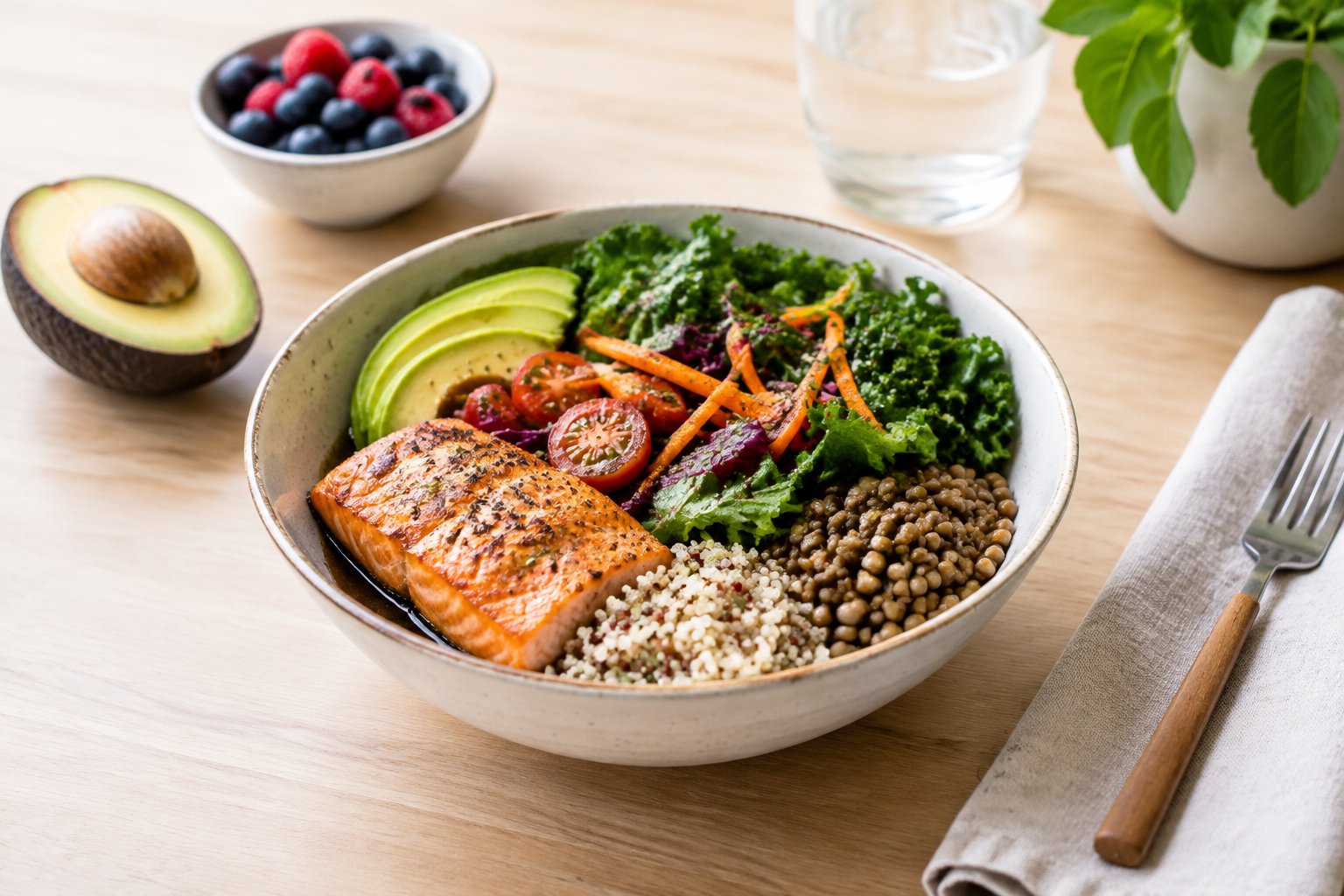
Protein-rich meals and soluble fiber help you stay satisfied while reducing calorie intake. A practical starting point is to include a protein food and a fiber-rich plant food at each main meal.
Build meals using this sequence:
- Choose protein: Eggs, tofu, poultry, plain Greek yogurt, or fish.
- Add soluble fiber: Oats, beans, lentils, barley, or apples.
- Include vegetables: Use fresh, frozen, or canned options that fit your budget.
- Finish with satisfying extras: Add whole grains and a portion of unsaturated fat, such as olive oil.
For example, pair oats with plain Greek yogurt at breakfast, or serve lentils with roasted vegetables at lunch. Fatty fish, including salmon and sardines, supplies protein and omega-3 fats as part of a balanced diet.
Protein supports muscle maintenance during fat loss. Soluble fiber slows digestion and supports appetite regulation. Fiber-rich meals also support blood sugar control.
Increase fiber gradually and drink water throughout the day to reduce digestive discomfort.
Replace Sugary Drinks and Limit Alcohol and Trans Fats
Replacing sugary drinks with unsweetened options is a practical way to reduce daily calories. Check beverages first because they are easy to overlook when planning meals.
A regular soda contains about 150 calories from sugar per 12-ounce serving. Start with the drink you have most frequently:
- Replace soda with water or unsweetened sparkling water.
- Order coffee with less syrup and skip whipped cream.
- Choose unsweetened green tea or iced tea.
- Serve whole fruit when you want something sweet.
Green tea fits a weight management plan as an unsweetened beverage. Treat claims about rapid belly-fat burning with caution.
Alcohol adds calories and lowers restraint around food. Set a drinking plan before social events and include alcohol-free days. If you drink heavily or have withdrawal symptoms, seek medical help before stopping abruptly.
For trans fats, check ingredient labels for partially hydrogenated oils, especially on imported foods. These fats have largely been removed from the US food supply. Choose unsaturated fats for everyday cooking and meals.
Combine Aerobic Exercise with Strength Training
Aerobic exercise and strength training work together to reduce visceral fat and preserve muscle during weight loss. Build both into your routine at a pace your body tolerates.
Work toward 150 minutes of moderate-intensity aerobic exercise each week. Brisk walking, cycling, swimming, and dancing are useful choices. At moderate intensity, your breathing speeds up while you remain able to talk.
Add strength training on at least two days per week, with recovery between sessions. A basic resistance training routine includes:
- A squat or chair sit-to-stand.
- A hip hinge or glute bridge.
- A wall push-up or chest press.
- A band row or supported dumbbell row.
Begin with controlled movements and a manageable resistance. Increase difficulty when your current workout feels comfortable and your technique stays steady.
Exercise also improves insulin sensitivity, helping your body use blood sugar. Abdominal exercises strengthen your core, but fat loss happens across the body according to individual fat-storage patterns.
Ask a clinician about suitable activity if you have symptoms or a condition that affects exercise safety.
Increase Daily Movement Beyond Your Workouts
Daily movement increases energy use outside planned exercise and supports metabolic health. Attach short movement breaks to things you already do.
Non-exercise activity thermogenesis (NEAT) means the energy used during activities such as walking around the house, cleaning, and gardening. These activities add movement across the day without requiring a gym session.
Choose a few repeatable changes:
- Walk during phone calls when it is safe.
- Take a brief movement break between work tasks.
- Use stairs when they suit your mobility.
- Walk after a meal.
- Carry groceries in several manageable trips.
If you track steps, use your current activity as the starting point. Increase gradually and account for pain, recovery, or mobility limits.
When low energy makes activity harder, begin with a shorter walk or seated movement. Persistent fatigue deserves medical attention, especially when it continues despite adequate food and rest.
Make Consistent, Quality Sleep a Priority
Consistent, quality sleep supports appetite regulation and gives you energy for daily activity. Protect enough time for at least seven hours of sleep each night.
Short sleep affects hunger signals, including ghrelin, a hormone that helps stimulate appetite. Feeling tired also makes meal planning and exercise harder to maintain.
Start by choosing a steady wake-up time. Then adjust bedtime to allow enough sleep and use a quiet wind-down routine. Keep your bedroom dark and comfortable, and move caffeine earlier if it delays sleep.
The connection between sleep and mental health also affects how manageable daily habits feel. Bring persistent insomnia, loud snoring, gasping during sleep, or daytime sleepiness to a clinician. These symptoms warrant attention even when your weight is stable.
Manage Stress with Small, Repeatable Habits
Small stress-management habits help protect the eating and sleep routines that support fat loss. Choose brief actions you can repeat during an ordinary day.
Cortisol is a normal stress hormone with important roles in the body. Long-lasting stress disrupts sleep and eating patterns, which creates obstacles to weight management. Belly shape alone does not reveal your cortisol level.
Choose a habit linked to a clear cue:
- After work, take a short walk before starting evening tasks.
- Before eating, pause and notice your hunger.
- During a tense moment, slow your breathing.
- At bedtime, write down unfinished tasks for tomorrow.
Mindful eating helps you recognize both physical hunger and stress-driven urges. If you need comfort, consider a conversation or a quiet break alongside your usual meals.
A healthy mindset includes realistic goals and room for setbacks. Seek professional support when stress interferes with sleep, relationships, or daily functioning.
Support Gut Health Without Mistaking Less Bloating for Fat Loss
Better gut health supports digestive comfort, while changes in bloating need separate tracking from fat loss. Note digestive symptoms alongside food habits so temporary swelling does not confuse your progress.
The gut microbiome includes the microbes living in your digestive tract. Prebiotics are substances that feed helpful microbes; foods such as oats, onions, and beans contain them. Probiotics are live microbes found in certain foods and supplements.
Build variety gradually, especially if you currently eat little fiber. Increasing fiber too quickly causes gas and bloating, so begin with smaller portions and increase as tolerated.
Probiotic effects depend on the strain and the condition being treated. When considering probiotics for constipation relief, discuss persistent symptoms with a clinician. Evidence does not support treating probiotics as a reliable belly-fat treatment.
A less swollen abdomen after a bowel movement or reduced gas reflects digestive changes. Seek medical care for persistent bloating, severe pain, blood in stool, or unexplained weight loss.
Track Your Waist and Adjust Habits Over Time
Consistent waist measurements help you assess abdominal changes over time. Pair waist circumference with strength, energy, and any health markers your clinician monitors.
Use the same method each time:
- Stand upright and relax your abdomen.
- Place a flexible tape around your waist, just above your hip bones.
- Keep the tape level and snug without pressing into your skin.
- Breathe out normally, then record the measurement.
- Repeat under similar conditions, such as before breakfast.
Review your waistline over several weeks. Bloating and fluid shifts affect individual readings, and waist circumference cannot directly measure visceral fat.
If progress stalls, check portions and drinks, then review activity and sleep. Make a small adjustment and give it time to show a pattern. Recognizing why weight loss is hard helps set realistic expectations as hunger and energy needs change.
For long-term weight management, record habits as well as measurements. That gives you useful information when belly fat loss slows.
Build Lasting Progress Through Consistent Habits
A healthy lifestyle supports lasting fat loss through habits you can maintain. Keep meals satisfying, combine exercise with everyday movement, and protect sleep as you work toward better metabolic health.
Choose a manageable food change and an activity habit to begin. Schedule a regular check-in to review your waist trend and how you feel. A sustainable weight-loss routine should leave enough energy for daily life; adjust your plan if hunger or fatigue becomes persistent.
Frequently Asked Questions
How quickly should you expect belly fat loss?
Allow several weeks to assess a meaningful trend in waist size. A gradual weight-loss pace of no more than 1 to 2 pounds per week helps preserve muscle, but it does not predict how quickly your abdomen will change.
Should you lose weight if your weight is already in a healthy range?
Discuss waist size and metabolic health with a clinician before pursuing weight loss at a healthy weight. Strength training and daily movement support health even when the scale stays steady.
How should you approach belly changes after pregnancy?
Return to activity gradually and get adequate nutrition after pregnancy, guided by your recovery. Safe weight loss after pregnancy also accounts for breastfeeding and abdominal muscle separation, which affects belly shape.
When should you ask for professional help?
Seek support if repeated weight-loss efforts lead to ongoing fatigue, distress around food, or little progress despite consistent habits. A clinician or registered dietitian can review medication effects and health conditions, and assess whether your current plan meets your needs.