We recommend topical minoxidil for women with female pattern hair loss because it supports regrowth and slows further thinning. Hair loss from a temporary trigger often improves after that trigger is treated. There is no permanent cure for hereditary thinning, but effective treatment can preserve hair and improve coverage. The first step is identifying the cause.
When you search for ways to cure women’s hair loss, it is important to tell temporary shedding apart from lasting follicle damage. Hair loss in women includes several conditions that need different care. We recommend getting a diagnosis before spending money on treatment, especially if you have scalp pain, sudden bald patches, or rapidly worsening loss.
Key Takeaways
- We recommend identifying the cause before starting treatment.
- Topical minoxidil supports regrowth in female pattern hair loss.
- Long-term treatment needs regular use and side-effect checks.
Step 1: Identify the Cause and Whether Your Hair Loss Is Reversible

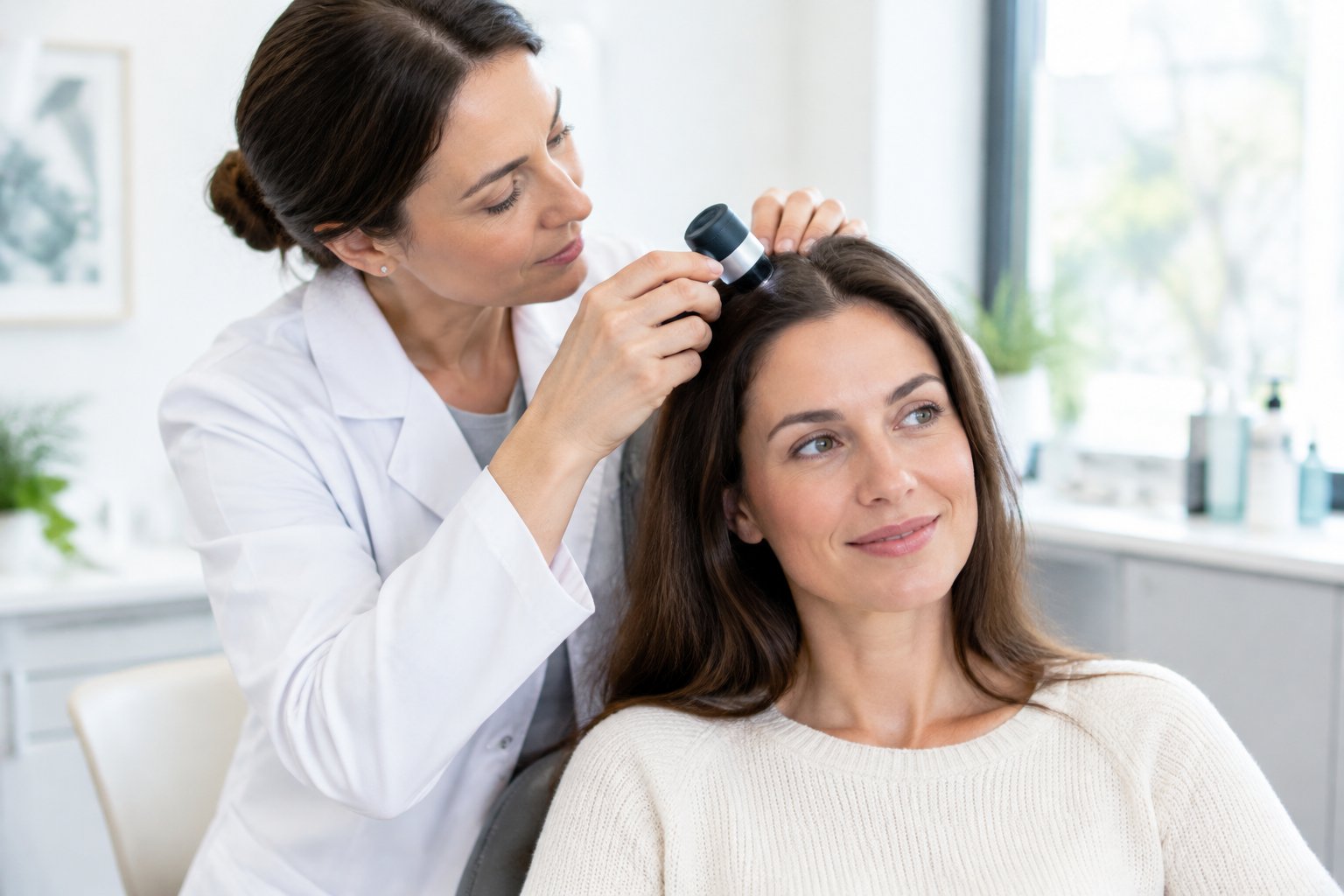
We recommend a scalp exam to tell reversible hair shedding apart from progressive or scarring hair loss. Bring a timeline of changes, your medication list, and details about any recent illness or weight loss. Tell your clinician about pregnancy, heavy periods, dietary restrictions, and family history.
Common causes of female hair loss include:
- Female pattern hair loss: Gradual widening of the part or thinning across the crown. Also called female pattern baldness or androgenetic alopecia, this hereditary hair loss needs ongoing treatment.
- Telogen effluvium: Increased shedding after a physical or emotional trigger. Recovery follows correction of the trigger, although visible fullness takes time.
- Traction alopecia: Hair loss from repeated pulling, especially around the hairline. Early treatment gives follicles a better chance to recover.
- Scarring alopecia: Inflammation destroys follicles, leaving permanent loss in affected areas.
Androgenic alopecia is another term for pattern baldness. A dermatologist can distinguish these conditions through your history and a scalp exam. Sometimes, targeted blood tests or a biopsy are needed. Whether hair loss is reversible depends largely on the cause and whether the follicles remain intact.
Step 2: Consider Topical Minoxidil for Female Pattern Hair Loss
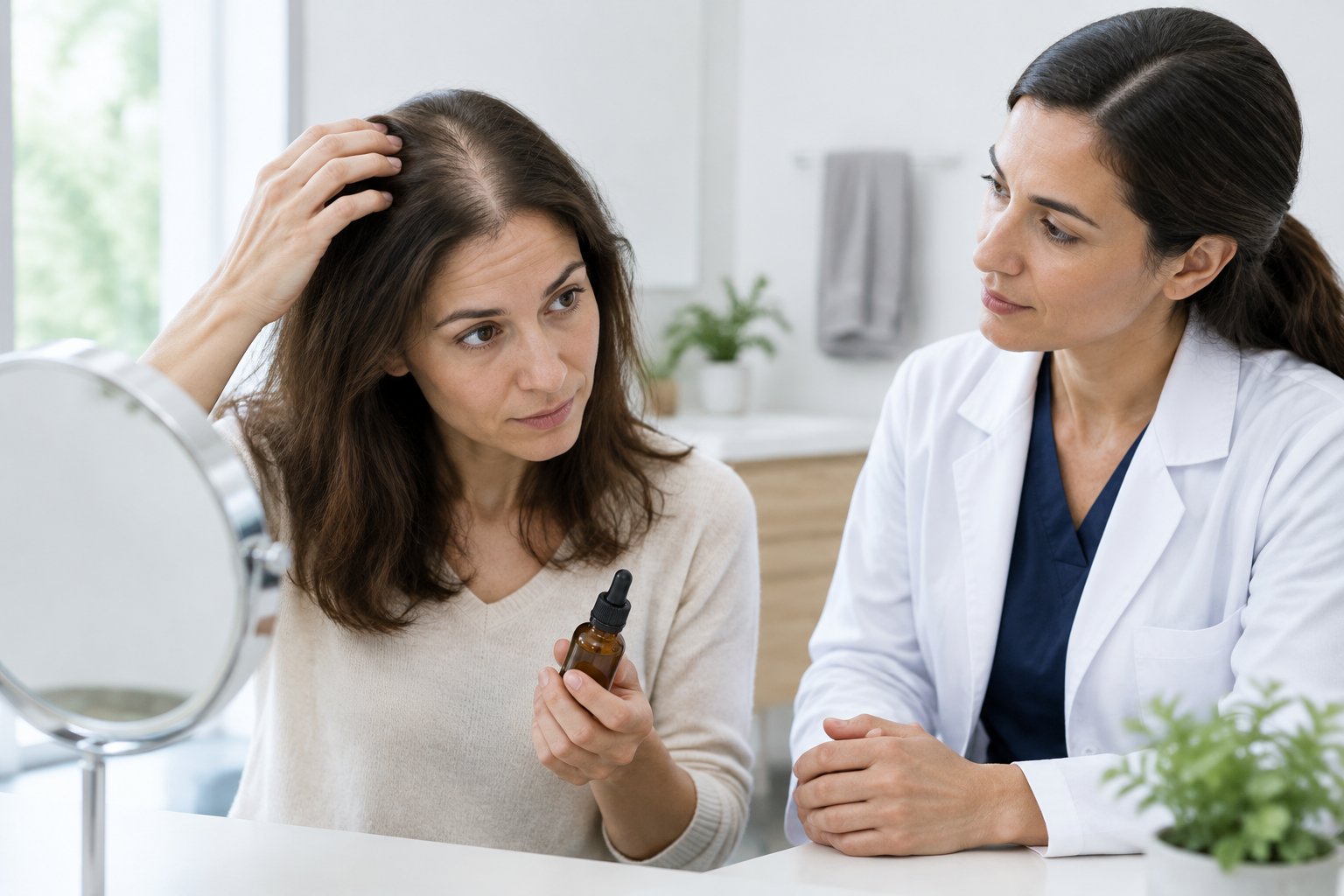
Topical minoxidil is our first medication recommendation for confirmed female pattern hair loss. FDA-approved options for women include 2% solution used twice daily and 5% foam used once daily. Minoxidil (Rogaine) and generic versions contain the same active medicine.
Apply the labeled amount directly to a dry scalp. Part your hair so the medicine reaches the skin. Wash your hands afterward, clean any drips from your face, and let the product dry before bed. Follow the instructions for your specific Rogaine or generic formulation.
An early increase in shedding can happen as hair cycles shift. Other side effects include irritation and unwanted facial hair growth. We recommend discussing persistent irritation with your clinician before stopping treatment.
Among treatments for women’s hair loss, minoxidil requires a steady routine. Hair regrowth takes time, and continued use is needed to maintain the benefit.
Step 3: Discuss Prescription Options and Pregnancy Precautions
Discuss prescription treatment with a clinician if topical medicine is unsuitable or does not help enough. We recommend reviewing your blood pressure, medical history, and pregnancy plans before choosing an option.
Medicines used off-label for female pattern hair loss include:
- Low-dose oral minoxidil: An option for people who struggle with topical application. Oral minoxidil requires screening for cardiovascular risks; side effects include unwanted body hair, ankle swelling, dizziness, and a fast heartbeat.
- Spironolactone: An anti-androgen used for selected patients. Your clinician decides whether kidney function and potassium testing are needed.
- Finasteride and dutasteride: Specialist options for selected women. Finasteride (Propecia) is approved for male pattern hair loss; dutasteride (Avodart) is approved for prostate enlargement. Neither has FDA approval for female pattern hair loss.
Plan for pregnancy precautions from the start of treatment. Avoid minoxidil during pregnancy, while trying to conceive, and while breastfeeding unless your treating specialist advises otherwise. Spironolactone, finasteride, and dutasteride require strict pregnancy avoidance because of fetal risks.
We recommend asking the prescriber about contraception and how far ahead of conception each medicine must be stopped. Report pregnancy promptly, and avoid handling crushed or broken finasteride tablets if you are pregnant.
Step 4: Get Targeted Treatment for Autoimmune or Inflammatory Hair Loss
Autoimmune and inflammatory hair loss need treatment aimed at the underlying disease. We recommend prompt dermatology care for smooth bald patches, burning, scalp tenderness, or shiny areas with missing follicle openings. These signs can help identify when hair loss signals a medical problem.
For limited alopecia areata, a dermatologist often uses steroid injections or topical steroids. Severe disease may require discussion of systemic treatment, including FDA-approved JAK inhibitors for eligible patients. These medicines need safety screening and monitoring.
Lupus and other inflammatory conditions need a separate treatment plan. When inflammation causes scarring, the immediate goal is to protect remaining follicles. Destroyed follicles do not regrow. We advise getting a firm diagnosis before adding cosmetic hair loss treatments.
Step 5: Treat Dandruff Without Mistaking Shampoo for a Regrowth Cure
Anti-dandruff shampoo treats flaking and itch, while hereditary thinning needs its own treatment. We recommend checking the active ingredient when choosing a hair loss shampoo. A thicker-looking hair shaft and new follicle growth are different outcomes.
Pyrithione zinc helps control the fungus involved in dandruff. Head & Shoulders Classic Clean Anti-Dandruff is one familiar option. Check the current U.S. label for its active ingredient and directions. Apply medicated shampoo to the scalp and follow its contact-time instructions.
Reducing itch also reduces scratching and related breakage. This supports scalp comfort and hair follicle health, but shampoo does not reverse follicle miniaturization. We recommend medical review if persistent itching accompanies hair loss, particularly with pain, crusting, or patches of broken hair.
Step 6: Correct Nutritional Deficiencies Before Buying Supplements
Correcting a documented deficiency is our recommended starting point for nutrition-related shedding. Ask your clinician whether your symptoms and diet justify blood tests, such as a blood count, ferritin, or thyroid testing. Other nutrient tests should be based on specific risk factors.
Nutrient deficiency screening should be guided by medical history and examination. Taking extra nutrients when your levels are adequate does not guarantee hair growth. Excess vitamin A or selenium can contribute to hair loss. Iron supplements also need a medical reason.
Before buying hair growth supplements such as Nutrafol Women or OMI Well Beauty Hair Growth Peptides, check:
- Whether evidence applies to the exact product and your diagnosis.
- The full ingredient list, including overlapping vitamins.
- Medication interactions and pregnancy warnings.
- Independent quality testing and the ongoing cost.
We recommend choosing hair loss supplements with safety in mind. Bring the label to your clinician, and disclose biotin before blood tests because it interferes with some results.
Step 7: Reduce Styling Damage and Set Realistic Expectations for Home Remedies
Reducing pulling and chemical damage protects hair while medical treatment addresses the cause of thinning. Our practical recommendation is to loosen any style that causes pain, bumps, or tension at the hairline. Repeated discomfort is a warning to change the style.
For traction alopecia, stop tight braids, heavy extensions, and firmly pulled ponytails. Reduce overlapping chemical treatments and excessive heat, and use conditioner to ease detangling. These steps help prevent avoidable hair damage and loss, although established scarring needs specialist assessment.
Gentle scalp massage is reasonable for comfort if your scalp is healthy. Evidence for meaningful hair growth remains limited, and vigorous rubbing adds friction. We advise treating oils and homemade masks as optional cosmetic care, with realistic expectations for hair thinning.
Stop any home remedy that causes burning or a rash. Avoid applying essential oils undiluted, and keep irritating products off inflamed skin.
Step 8: Weigh the Evidence for Laser Therapy, PRP, and Microneedling
We consider laser devices, platelet-rich plasma, and microneedling possible add-ons for selected patients with pattern hair loss. Before paying, ask what improvement is realistic for your diagnosis and how the treatment fits your existing plan. These options require time and, in some cases, repeat procedures.
Low-level laser therapy (LLLT) uses light to stimulate follicles. If you are considering HairMax LaserBand 82 ComfortFlex or LaserCap SD, verify the exact model’s FDA clearance, intended users, and treatment schedule. FDA clearance does not guarantee an individual result.
Platelet-rich plasma: PRP injections use a concentrated portion of your own blood. Some patients gain density, but preparation methods and treatment schedules vary. Ask about pain control, maintenance visits, and the full course cost.
Microneedling: This procedure makes small controlled punctures in the scalp. It shows promise as an add-on, although clinical evidence remains relatively low quality.
Our standard for hair loss treatments that work includes evidence relevant to your condition and clear safety instructions. Avoid aggressive home needling, which introduces infection and scarring risks.
Step 9: Find Out Whether a Hair Transplant Is Appropriate
A hair transplant suits selected women with stable loss and a healthy donor area. We recommend an assessment by a qualified hair restoration surgeon after a dermatologist confirms the diagnosis. Diffuse thinning throughout the scalp limits the supply of suitable donor hair.
Hair transplant surgery moves existing follicles into areas that need coverage. It creates neither new follicles nor protection against future hereditary hair loss. Women with female pattern hair loss still need a plan to preserve surrounding hair.
Ask the surgeon about donor density, expected coverage, scarring, and the risk of temporary shedding around the procedure. Request photographs of patients with a similar pattern and hair texture. Active inflammatory disease and temporary shedding need treatment before surgery is considered.
We also recommend discussing bleeding, infection, and the possibility of further procedures. Get the full cost and follow-up arrangements in writing before scheduling.
Step 10: Track Results, Monitor Side Effects, and Adjust Your Plan
A repeatable record helps you and your clinician judge whether treatment is helping. Before starting, take baseline photographs of your part, crown, and hairline. Use the same lighting, camera distance, hairstyle, and hair condition for later photos.
Keep a brief record of how often you apply treatment, missed doses, scalp symptoms, and changes in hair shedding. Early success includes stable coverage and reduced loss. Visible regrowth takes longer. Minoxidil needs at least six months of treatment to judge meaningful benefit.
Review hair loss treatments at the interval your clinician sets. Before switching, check your diagnosis and whether you have used the treatment as directed. Make changes for a clear reason so you can judge their effect.
Seek prompt medical advice for persistent irritation or unexpected swelling. Chest pain, fainting, shortness of breath, or a rapid heartbeat during minoxidil treatment require urgent assessment.
Choose a Sustainable Treatment That Matches Your Diagnosis
Build a hair loss treatment plan around a confirmed diagnosis and a routine you can maintain. Temporary hair loss calls for correcting its triggers, while hereditary thinning needs ongoing care.
When choosing a hair loss treatment, weigh expected benefits against side effects and the daily commitment. Start with your clinician’s recommended treatment, document your baseline, and schedule a review before adding more products.
Frequently Asked Questions
Keep hair care gentle while your treatment has time to work. The answers below address practical concerns during recovery.
Should you wash your hair less often to reduce shedding?
Wash often enough to keep your scalp comfortable and clean. Washing releases hairs that have already detached, so visible shedding in the shower does not mean shampoo caused the loss. Adjust your routine if a product irritates your scalp.
Does female pattern hair loss always mean high testosterone?
Female pattern hair loss occurs in women with normal androgen levels. Discuss hormone testing with your clinician if thinning comes with irregular periods, new acne, or increased facial hair. Those symptoms help your clinician decide whether an endocrine evaluation is needed.
Is scalp massage safe if you have traction alopecia?
Avoid massage over sore, inflamed, or recently damaged areas affected by traction alopecia. Removing tension is the priority; rubbing does not repair scarred follicles. Ask your dermatologist when gentle scalp massage is appropriate.
Do short hairs always mean hair regrowth?
Short hairs can be new growth or breakage. To check progress, compare repeat photographs and have a scalp exam, since length alone does not show whether treatment is working. In women, mixed causes of hair loss can lead to both shedding and breakage.