
We recommend a 10-minute daily routine that combines focused attention, recall without looking, and spaced reviews to help you improve memory and practice the skills used in learning. Pair these daily memory exercises with regular movement and enough sleep to support brain function. The aim is to remember useful information with fewer prompts and give it your full attention when you first learn it.
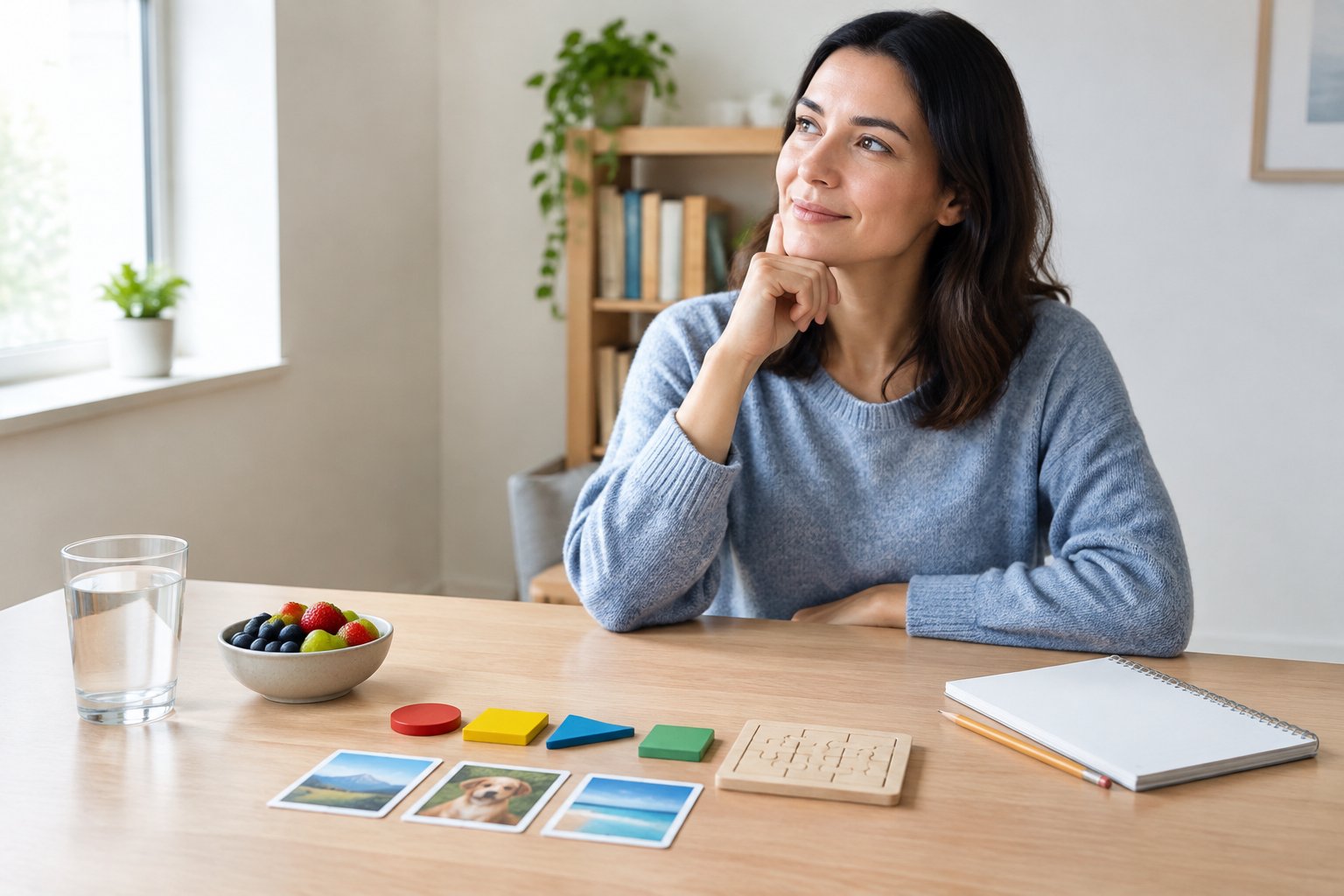
A familiar paragraph feels easy to recognize, but recalling its main points after closing the book takes more effort. That effort gives you a useful way to check what you learned. We favor exercises tied to everyday needs, such as remembering instructions or explaining something you just read.
Key Takeaways
- Recall information before checking your notes.
- Review material across separate days.
- Support practice with sleep, movement, and balanced meals.
Start with a Simple 10-Minute Daily Routine
We suggest starting with a short routine that exercises attention and memory without requiring special equipment. Gather paper, a pencil, a timer, and several small household objects.
Use this schedule as a practical starting point:
- Two minutes of attention: Silence notifications and focus on your breathing. Return your attention whenever it wanders.
- Three minutes of object recall: Study an arrangement of objects, cover it, and write down their names and positions. Check your answer.
- Two minutes of working-memory practice: Look at a short string of digits, cover it, and say it backward. Adjust the length to your ability.
- Three minutes of learning: Read a short passage, close it, and write its main points from memory. Correct any errors.
These are free brain exercises for memory that you can adapt to your interests. The time limit is our suggested format, not a proven dose for memory improvement.
Keep memory training challenging enough to require attention while leaving room for success. Treat these brain exercises as one part of improving memory and protecting everyday recall, alongside health habits and practical reminders.
Practice Active Recall and Space Out Your Reviews
Active recall means bringing information to mind before checking the answer. Practicing retrieval strengthens long-term retention, so it can help you learn facts and remember what you read.
We recommend this sequence:
- Read a short, meaningful passage.
- Close the material and explain the main idea aloud.
- Write questions about the details you missed.
- Check your answers and correct mistakes.
- Test yourself again on another day.
Spaced repetition spreads those attempts across time. Try reviewing the next day, several days later, and the following week. Shorten the gap when you struggle; lengthen it when recall becomes reliable.
For reading, ask yourself what the author claimed and which example supported it. For journaling, write what you remember about a conversation or lesson before checking any notes.
Record correct answers as well as gaps. This keeps memory recall practice accurate and helps you focus later reviews on information that still needs work.
Use Chunking, Visualization, and a Memory Palace
We recommend organizing information into meaningful groups and clear mental cues before trying to memorize it. Chunking reduces the number of separate items you need to hold in working memory.
For a shopping list, group items by meal or store aisle. For instructions, separate the task into stages and give each stage a short label. Practice recalling the groups, then the details within them.
Visualization adds an image to the information. To remember bread and apples, imagine an apple tree growing through a loaf of bread. Choose an image that clearly points back to the intended words.
The memory palace technique, also called the method of loci, uses familiar locations as retrieval cues:
- Choose a familiar route through your home.
- Pick distinct stops along that route.
- Place a mental image for each item at one stop.
- Mentally walk the route in the same order.
- Check your list and repair unclear associations.
This approach uses spatial memory when recalling sequences. If mental pictures are difficult, describe each location and association in words. Keep written backups for medication instructions and other safety-critical information.
Train Your Attention with Mindfulness and Single-Tasking
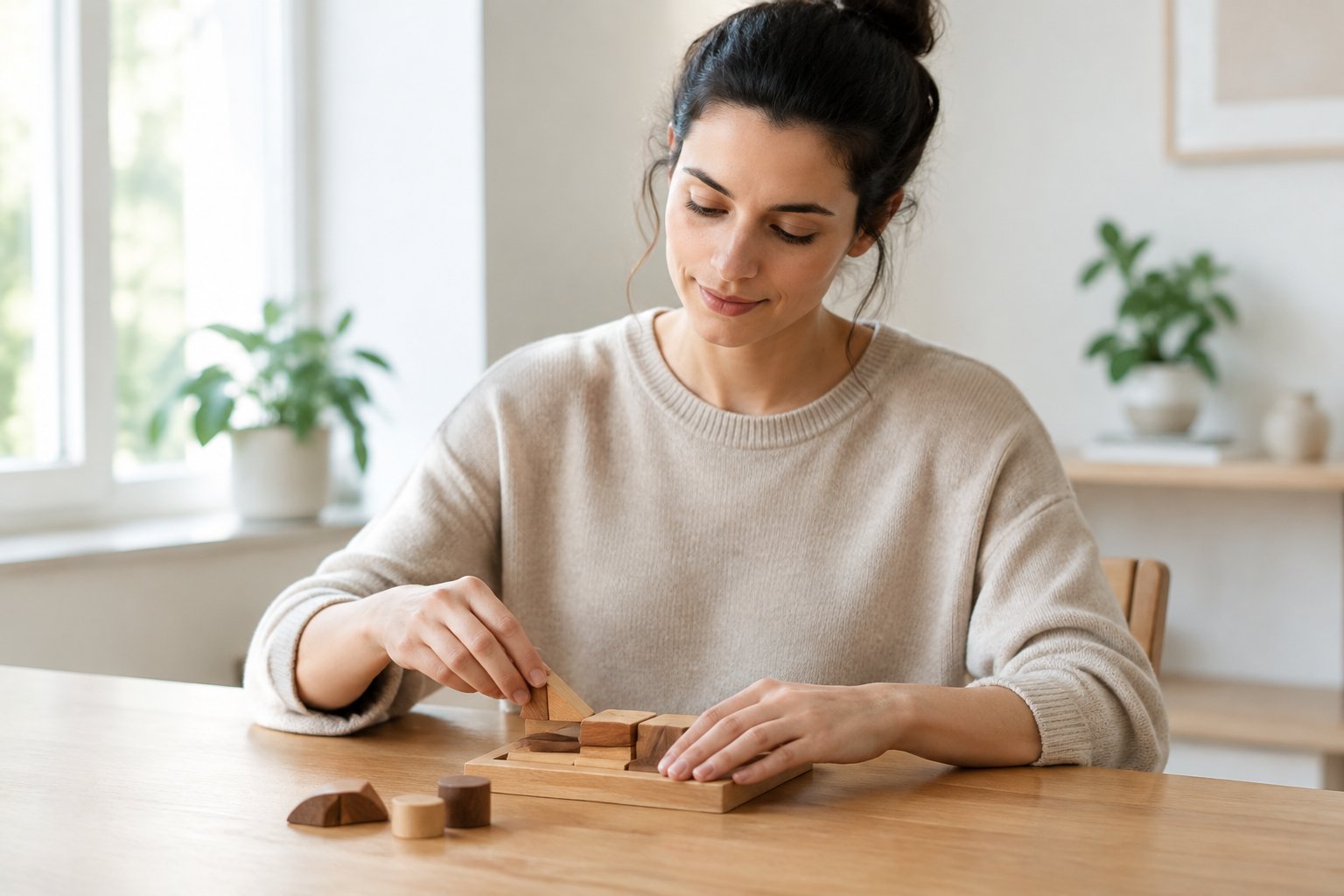
Giving information your full attention helps you form a clearer memory of it. Mindfulness practice helps people concentrate and pay more attention, though results differ across people and programs.
We suggest using mindfulness meditation as a brief attention exercise:
- Sit comfortably and notice your natural breathing.
- When a thought distracts you, acknowledge it.
- Return attention to the next breath.
- Continue without judging each lapse.
The skill you are practicing is noticing distraction and returning. You do not need to empty your mind.
Apply the same approach to single-tasking. Choose one clear task, close unrelated tabs, and put your phone out of reach. Keep paper nearby to capture unrelated thoughts without acting on them.
For better concentration, change your surroundings as well as your habits. Mindfulness and meditation fit within our recommendations for using meditation to support mental health. If breath-focused meditation causes distress, use an external focus such as a nearby object.
Choose Memory Games and Puzzles That Challenge You
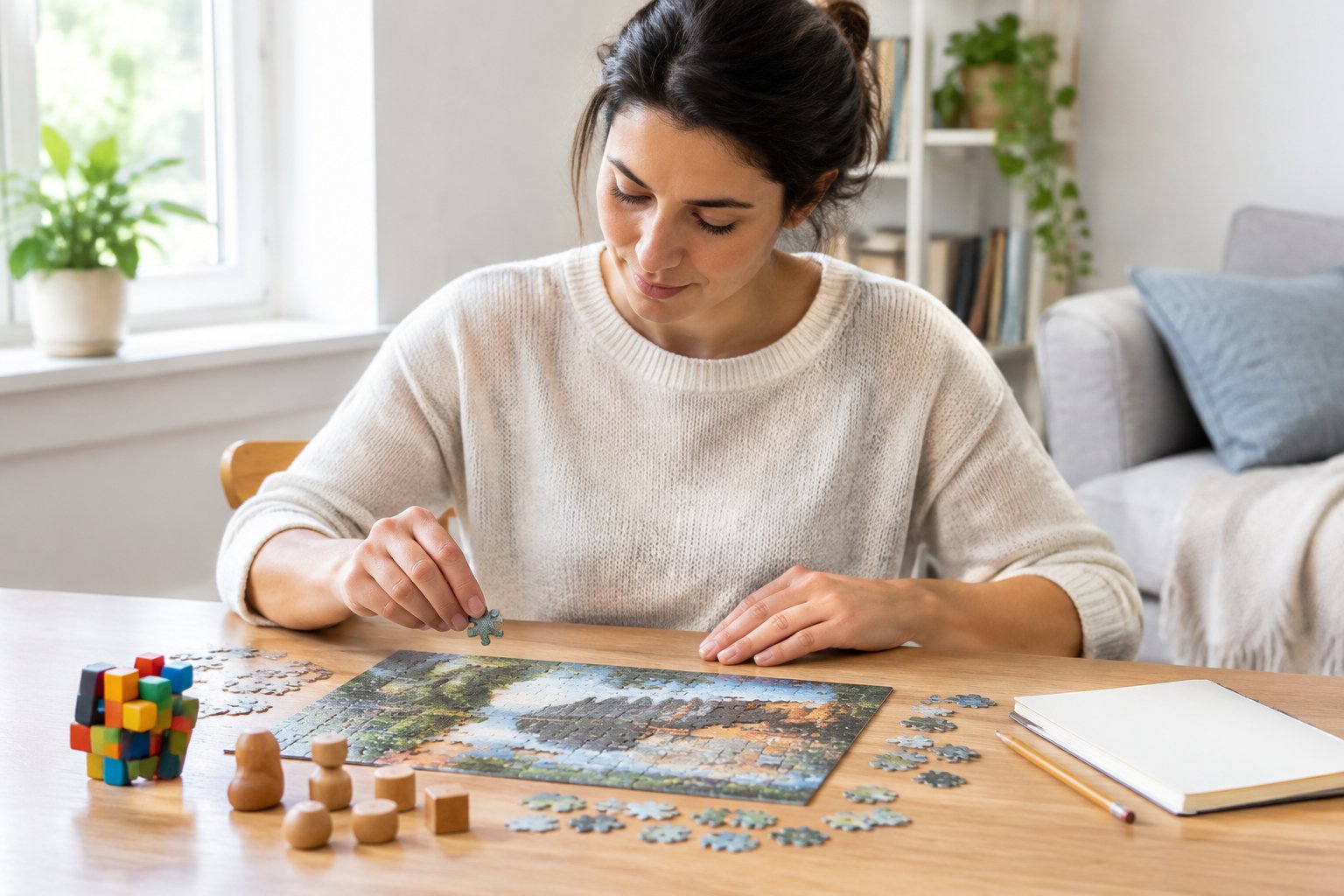
We favor memory games and puzzles that require deliberate thought and give you clear feedback. Choose a difficulty that lets you make progress while still needing to work through mistakes.
Match the activity to the skill you want to practice:
| Activity | What you practice |
|---|---|
| Matching pairs | Remembering object locations |
| Card games | Tracking cards and following rules |
| Crossword puzzles | Retrieving words and facts |
| Sudoku | Applying rules and checking possibilities |
| Jigsaw puzzles | Comparing shapes and spatial relationships |
| Chess and strategy games | Planning and evaluating choices |
| Mental math problems | Holding and changing information in mind |
Add a recall step to make solving puzzles more purposeful. After finishing a crossword, recall unfamiliar answers and their meanings. After a chess game, explain a decision that changed the position.
Increase difficulty when the task becomes automatic. With matching pairs, add cards; with mental arithmetic, add another calculation step. Brain games exercise the skills they involve, while broader improvements in problem-solving skills require separate evidence.
Build Recall Through New Skills and Social Activities
Learning new skills gives you meaningful material to remember and use. We recommend choosing a hobby you want to continue, then building recall into each practice session.
For learning a new language, retrieve words before revealing their translations and use them in original sentences. When playing a musical instrument, practice a short passage and attempt it without the score. Check errors before repeating it.
Drawing and painting offer another approach: observe an object, put it out of sight, and sketch it from memory. Compare the result with the object to identify missing details. Listening to music becomes a recall exercise when you try to remember a melody or describe changes in rhythm afterward.
Social interaction adds questions and unexpected responses. Join a class, discuss a book, or explain a new skill to someone who can ask follow-up questions.
These hobbies support creativity and give you chances to practice mental flexibility. For older adults, we include enjoyable learning and regular social contact among habits that support memory in later life, without promising prevention of memory disorders.
Support Your Practice with Walking and Regular Movement
Regular physical exercise supports brain health alongside your memory practice. Exercise also supports thinking indirectly by improving mood and sleep and reducing stress and anxiety.
We recommend walking as an accessible starting point. Choose a safe route and a pace suited to your fitness. Build up gradually, especially after a period of inactivity.
Harvard Medical School recommends working toward 150 minutes of moderate-intensity exercise each week. Adapt your plan with a clinician if you have symptoms or health conditions that affect exercise safety.
Running, swimming, and other aerobic exercise provide alternatives. Yoga adds balance and controlled movement, while sports introduce decisions and changing movement patterns.
Keep attention on traffic and footing during activity. Save demanding recall drills for a safe pause or after your walk. We also recommend movement for its mental health benefits, which complement its role in cognitive health.
Protect Sleep and Support Memory with Everyday Nutrition
We recommend protecting sleep and eating balanced meals as the foundation for daily practice. Sleep helps consolidate learned information, while sleep loss interferes with attention and learning.
Keep a steady sleep schedule and allow enough time to wake rested. Discuss persistent insomnia, loud snoring, or daytime sleepiness with a clinician.
For meals, choose a varied mix of vegetables, fruit, beans, whole grains, and suitable protein foods. Even mild dehydration reduces mental energy and impairs memory. Keep water available, while following any medical limits on fluid intake.
Fatty fish supplies omega-3 fatty acids. Walnuts and seeds provide plant forms of omega-3s. We favor building meals around foods that support memory and brain health without treating any single food as a remedy.
Phosphatidylserine is a substance found in cell membranes and sold in memory supplements. Evidence is insufficient to promise meaningful memory improvement in healthy adults. Our advice on memory supplements starts with checking potential interactions and discussing cognitive concerns with a clinician.
Track Progress and Understand What Brain Training Can Do
We recommend measuring performance on useful tasks while keeping expectations for brain training realistic. Better scores show progress on the practiced task; they do not establish gains across every cognitive ability.
Keep a brief log with:
- The exercise and difficulty.
- Correct answers and errors.
- Recall after a delay.
- Sleep quality or unusual distractions.
- A related everyday task you want to improve.
Use fresh material of similar difficulty when checking progress. Repeating an identical list measures memory for that list.
Brain training apps such as Elevate and Lumosity offer structured exercises and progress tracking. Dual n-back training asks you to track changing information across sound and location. Improvements on these cognitive exercises do not reliably transfer to broad gains in intelligence or daily functioning.
Neuroplasticity, also called brain plasticity, describes the brain’s ability to change with experience. Learning involves changes in neural connections. Neurogenesis means the formation of new neurons, and an app score cannot measure it.
Keep cognitive training within a broader plan for mental and physical health. Brain training exercises are not proven to prevent dementia. Seek medical assessment when cognitive decline affects familiar tasks; sudden confusion requires urgent care.
Make Small Memory Challenges a Consistent Habit
We recommend attaching daily memory exercises to an existing routine and keeping the starting task manageable. After breakfast, complete your short practice; after reading, recall the main idea before checking it.
Continue spaced reviews and adjust difficulty using your log. Support mental fitness with movement, sleep, and regular social contact. For your next session, choose one useful piece of information, retrieve it without looking, and check its accuracy.
Frequently Asked Questions
We address a few practical choices that come up when fitting memory practice into daily life.
What should you do when interrupted during a recall exercise?
Pause and mark where the interruption occurred. We suggest restarting with fresh material when you have a quiet moment so the result reflects your concentration more fairly.
Should you read aloud during memory practice?
Reading aloud is useful when it helps you attend to the words. We recommend checking its value by testing your memory afterward, since speaking the text does not show that you retained it.
Are scores from brain training apps medical tests?
Consumer game scores do not diagnose a memory disorder. If you have persistent concerns, discuss them with a clinician. They can assess your symptoms and how they affect daily activities.
How should you handle a missed practice day?
Resume your usual routine at the next convenient time. Keep the next session short and review material that was already due, rather than doubling the workload.