
We recommend reducing arthritis-related joint pain and stiffness with a daily warm-up, gentle stretches for affected joints, and a range of motion that feels comfortable. Stretching for arthritis helps maintain flexibility and makes everyday movements easier. Start with movements approved by your healthcare professional, especially if you have swollen joints or recent surgery.
Arthritis pain sometimes leads people to move less, which adds muscle tightness to joint stiffness. A short, repeatable routine can help interrupt that cycle. Stretching supports arthritis treatment, while medication and other prescribed care address needs that exercise alone cannot meet.
Choose Safe Movements for Your Affected Joints

Choose supported movements that create mild muscle tension without increasing joint pain. A physical therapist can tailor exercises to your arthritis symptoms and current mobility.
Osteoarthritis and rheumatoid arthritis may need different adjustments when swelling or joint damage is present. A replaced joint also has movement limits set by your surgical team.
Before starting:
- Check the joint: New warmth, redness, or marked swelling calls for a change in plans and medical advice.
- Choose a stable position: Use a sturdy chair without wheels, a supportive bed, or a firm exercise surface.
- Keep support nearby: Use a counter for balance during standing movements.
- Move slowly: Ease into each position without bouncing or pulling against resistance.
Know the difference between muscle tension and joint pain. A gentle pulling feeling in a muscle is acceptable. Stop if you feel sharp pain, pinching, or a sense that the joint will give way. Ask for an adapted movement if the same exercise repeatedly causes symptoms.
Warm Up Before Holding Any Stretches
Begin with easy movement before holding a stretch. A five- to 10-minute warm-up before static stretching helps prepare your muscles.
Walk slowly indoors or march gently while seated. Add small shoulder rolls and comfortable ankle movements as your body warms up.
Dynamic stretching means moving smoothly through a comfortable range. Static stretching means settling into a position and holding it without bouncing.
A warm shower can also help loosen stiff joints before movement. If you use a heating pad, follow its instructions and protect your skin. Avoid applying heat to a hot, swollen joint, and keep your first movements small even if warmth makes the joint feel better.
Stretch Your Hips, Knees, and Lower Back Gently
Use supported lower-body stretches that avoid pressure on painful knees. After your warm-up, start with whichever of these positions feels easiest.
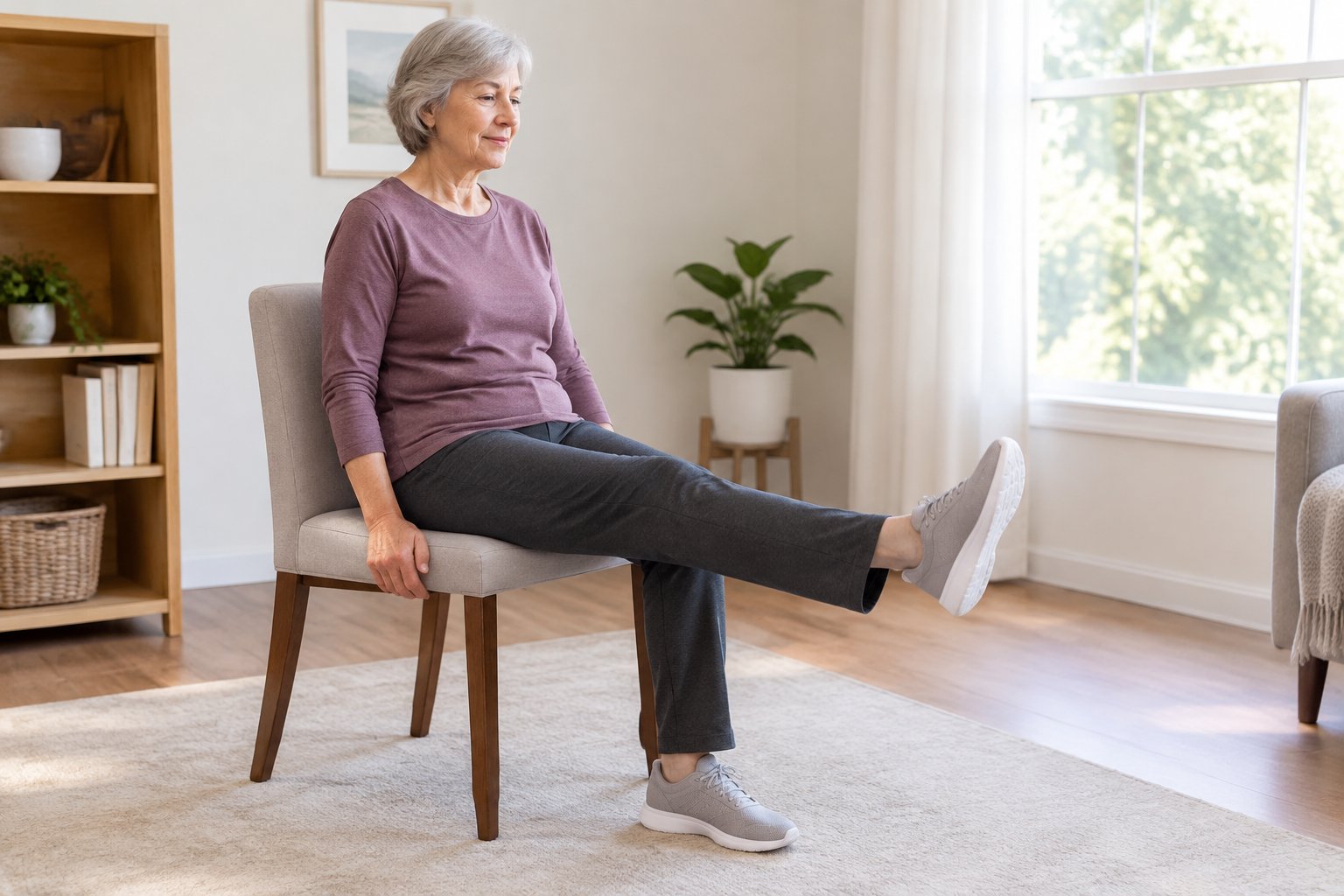
- Hamstring stretch: Sit near the front of a sturdy chair. Extend one leg with your heel resting on the floor and your knee slightly bent. Keep your back long and hinge forward gently from your hips until you feel tension behind your thigh.
- Single knee to chest stretch: Lie on your back with both knees bent and feet supported. Hold behind one thigh and guide it toward your chest. Keep your head resting on the surface and stop before your hip or knee pinches.
- Piriformis stretch: Lie on your back with bent knees. Rest one ankle across the opposite thigh, above the knee. If comfortable, hold behind the supporting thigh and draw it toward you without pressing on the crossed knee.
Hold a comfortable stretch for up to 30 seconds, release slowly, and change sides. Start with a brief hold if maintaining the position feels tiring.
For knee arthritis, allow a slight knee bend during hamstring stretches. With chronic lower back pain, stop any stretch that sends pain farther down your leg. Follow surgical precautions after hip or knee replacement.
Loosen Your Neck and Shoulders Without Forcing Movement

Keep neck stretches small and controlled, with your shoulders relaxed. Avoid putting hand pressure on your head, as this increases the force of a neck stretch.
Try these movements while sitting upright:
- Neck tilts: Slowly bring one ear toward the same-side shoulder. Keep both shoulders level, pause at gentle tension, and return to center before switching sides.
- Head turns: Turn your head as if looking over one shoulder. Stay within an easy range and bring your face back to center.
- Shoulder rolls: Lift your shoulders slightly, then roll them backward and down. Keep the circles smooth.
- Serratus punch: Lie on your back with your head supported. Reach your arms toward the ceiling, then reach a little farther so your shoulder blades lift slightly. Lower them slowly without lifting your head.
The serratus punch is a shoulder-control exercise, so use a gentle moving reach. Stop neck exercises if you develop dizziness, tingling, or arm pain.
If you have rheumatoid arthritis affecting your neck, get medical clearance before stretching it. Some people with rheumatoid arthritis develop instability in the upper spine and need specific precautions.
Ease Hand and Wrist Stiffness with Gentle Exercises
Begin hand and wrist exercises with relaxed movements and very light pressure. Start with unresisted motion, especially when finger joints feel tender.
- Finger extension: Rest your hand on a table and gently straighten your fingers. Release without pushing them flat.
- Fingertip touches: Touch your thumb to each fingertip in turn, forming a loose circle.
- Wrist flexor stretch: Support your forearm with your palm facing upward. Let your wrist extend slightly, then use the other hand for a light stretch only if comfortable.
- Towel squeeze: Hold a soft, rolled towel and squeeze lightly before relaxing fully. Skip this strengthening exercise when gripping hurts or your joints are swollen.
Keep your wrist aligned with your forearm during finger movements. Avoid adding a resistance band until a therapist confirms that resistance suits your joints.
Hand exercises should stay pain-free and use slow, smooth movements. If a wrist stretch causes numbness or tingling, stop and ask your clinician about the symptoms.
Keep Your Ankles and Toes Moving Comfortably
Seated ankle and toe movements help you work on flexibility without loading painful feet. Keep your heel or lower leg supported so balance does not distract from the movement.
Start with these exercises:
- Ankle circles: Lift one foot slightly and draw slow circles in each direction. Move through the ankle while keeping your knee fairly still.
- Point and flex: Point your foot away, then bring it gently toward your shin.
- Toe spreads: Rest your feet on the floor and spread your toes without curling them tightly.
- Gentle toe stretches: With your foot supported, use your hand to guide the toes back slightly. Stop if a toe joint feels compressed or painful.
Keep circles small if your ankles feel stiff. Avoid forcing a painful big toe upward, particularly when arthritis limits that joint.
These movements fit within a broader plan to keep your joints healthy as you age. Supportive footwear and an activity level suited to your symptoms also deserve attention.
Build a Short Daily Routine You Can Repeat
Build your stretching routine around a reliable time when your joints feel relatively comfortable. Start with a small selection of movements so you can judge your response.
Use this order:
- Warm up: Walk slowly or move gently in a chair.
- Move your stiffest joints: Use controlled shoulder rolls, finger movements, or ankle circles.
- Add selected holds: Choose stretches that match your affected areas.
- Finish gradually: Release each position slowly and return to easy movement.
Choose a comfortable stretch for each affected area; completing every exercise is unnecessary. Breathe normally throughout each hold and avoid bracing your whole body.
If morning stiffness makes stretching difficult, begin with easy range-of-motion movements and save longer holds for later. Pair the routine with an existing habit, such as getting dressed after a warm shower. Increase the amount only when your current routine leaves symptoms stable afterward and the next morning.
Adjust Your Routine During Flares or Increased Pain
Reduce stretch intensity when joint pain or swelling rises. Follow your clinician’s flare plan and keep movement within a smaller, comfortable range.
During a flare, shorten holds and leave out resisted exercises such as towel squeezes. Rest an irritated joint between brief movement sessions. A hot, swollen joint needs assessment if the symptoms are new, severe, or unusual for you.
As a practical check, ease back if discomfort lasts longer than two hours after stretching or exceeds your usual pain. Also watch for increased swelling and worse function the following day.
Rheumatoid arthritis flares sometimes require a treatment adjustment. Fibromyalgia calls for careful pacing when widespread pain or fatigue increases, even without swollen joints.
Seek urgent care for a suddenly red, hot, swollen joint, especially with fever or feeling unwell. New weakness, loss of bladder or bowel control, or numbness around the groin also needs urgent assessment.
Track Your Progress and Add Joint-Friendly Activity
Track daily function alongside symptoms, then add suitable physical activity as your tolerance improves. Keep a brief record of the movements completed and how your joints feel afterward.
Useful signs of progress include easier dressing, a more comfortable first walk after sitting, or better reach. Record any swelling or lingering pain so a physical therapist can help adjust your arthritis management plan.
Stretching works alongside aerobic and strengthening exercise. The CDC recommends at least 150 minutes of moderate activity weekly and muscle strengthening on at least two days, with gradual steps toward those goals.
Walking, pool exercise, and cycling are joint-friendly options. For strength work, a therapist might recommend a seated leg extension: slowly straighten your knee within a comfortable range, then lower your foot. Leg lifts require suitable positioning and control, particularly if your back or hips hurt.
Add only one new exercise or increase at a time. This makes it easier to identify what caused a change in symptoms.
Frequently Asked Questions
Stretching for arthritis supports movement, while joint damage and ongoing inflammation need appropriate medical care. Keep that distinction in mind when setting expectations.
Does stretching repair cartilage damaged by arthritis?
Stretching does not regrow worn cartilage. Its role is to maintain flexibility and usable range of motion, which supports daily function.
How long does stretching take to improve arthritis pain?
Changes in flexibility take days to weeks, and pain relief varies with the cause of your symptoms. Track everyday tasks and review persistent limits with your physical therapist.
Is prolonged morning stiffness a reason to seek medical advice?
Persistent or worsening morning stiffness deserves medical attention, especially with swollen joints. Tell your clinician how long it lasts and which joints are affected, since that pattern helps guide assessment.
Should I stretch a knee that locks or gives way?
Stop stretching a knee that locks or gives way and arrange a medical assessment. These symptoms need evaluation before you continue exercises for knee arthritis.
Can stretching replace rheumatoid arthritis medication?
Stretching cannot replace medication prescribed to control rheumatoid arthritis. Continue your treatment plan, and discuss any medication changes with your rheumatology team.