We recommend managing seasonal allergy symptoms at home by reducing pollen exposure, keeping indoor air clean, and using a saline nasal rinse prepared with safe water to clear mucus and allergens. These steps offer a practical starting point for mild symptoms, alongside any prescribed treatment.
Natural remedies for seasonal allergies differ in safety and evidence. Our approach puts daily habits first and treats supplements with caution. If seasonal allergy symptoms disrupt your sleep or affect your breathing, medical care belongs in your plan.
Key Takeaways
- Reduce pollen exposure outdoors and keep it out of your bedroom.
- Prepare nasal rinses with distilled, sterile, or previously boiled and cooled water.
- Seek medical care when symptoms persist or breathing becomes difficult.
Step 1: Identify Your Symptoms and Allergy Triggers

We recommend matching your symptom pattern with likely allergy triggers before choosing a remedy. Seasonal allergies, also called allergic rhinitis or hay fever, cause sneezing, an itchy nose, clear drainage, and itchy or watery eyes.
In a pollen allergy, immunoglobulin E (IgE) antibodies help activate immune cells called mast cells. These cells release histamine and other chemicals that cause allergy symptoms. This allergic immune response explains why a harmless airborne substance triggers discomfort.
Start a brief daily log:
- Record symptoms and whether they affect sleep.
- Note outdoor activities and local pollen conditions.
- Record time around pets or damp spaces.
- List treatments used and any side effects.
Tree pollen is common in spring, grass pollen in late spring and summer, and weed pollen, including ragweed, in late summer and fall. Timing varies across the United States. Mold spores also fluctuate with weather, while pet dander causes symptoms throughout the year.
Use your log to identify likely allergy triggers. Fever or body aches may indicate an illness; mucus color alone cannot establish the cause.
Step 2: Use a Saline Nasal Rinse With Safe Water
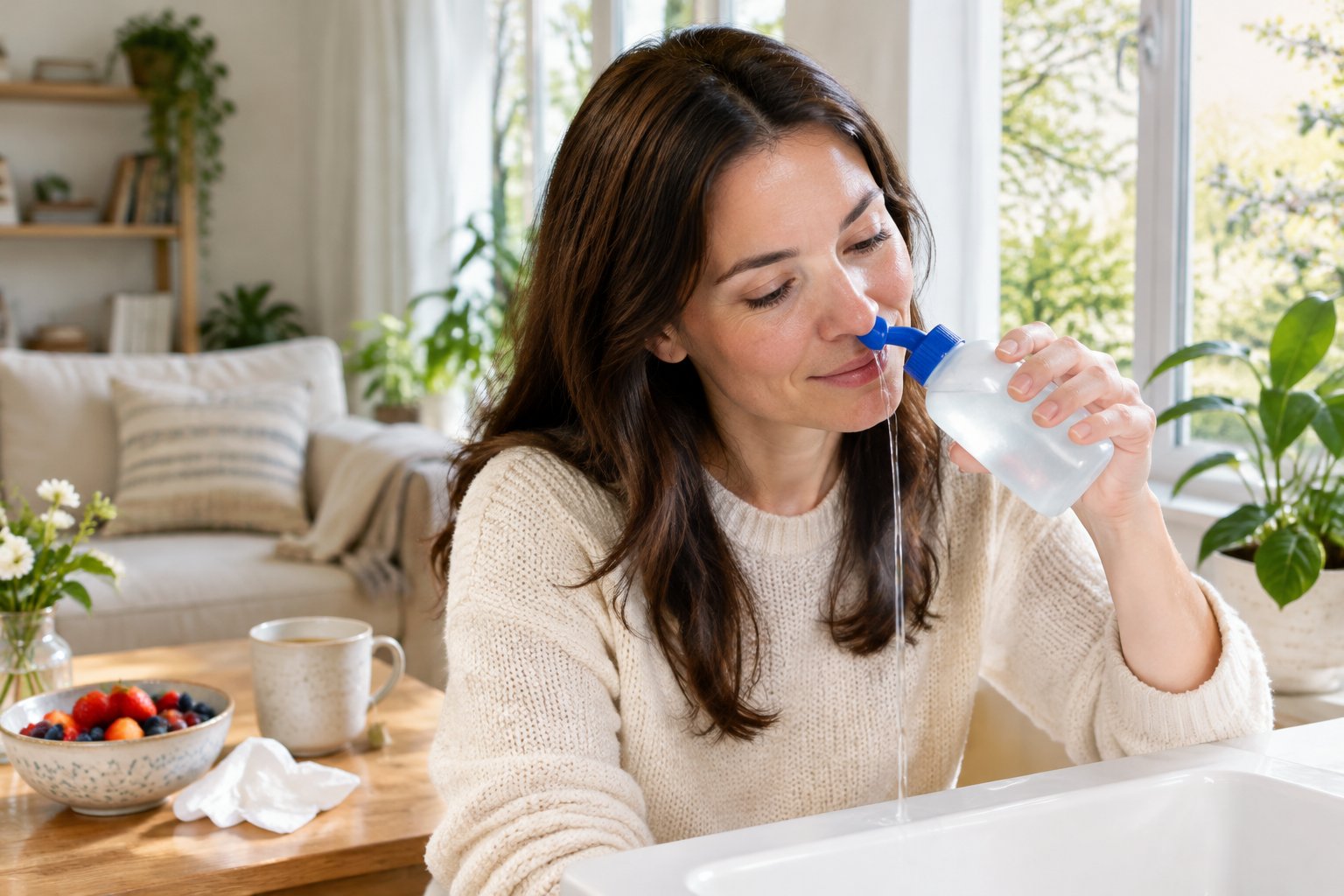
A saline nasal rinse helps wash mucus and allergens from your nasal passages. We recommend a commercial saline packet and a rinse device with clear instructions to reduce mixing errors.
Saline irrigation helps remove and thin excessive mucus. It may offer relief for some people with rhinitis.
Follow these steps for nasal irrigation:
- Wash your hands. Use a clean neti pot or squeeze bottle.
- Choose safe water. Use distilled or sterile water, or previously boiled and cooled water. Ordinary tap water and standard pitcher-filtered water are unsuitable.
- Prepare the saline solution. Mix the packet with the exact amount of lukewarm water listed on its label.
- Rinse gently. Lean over a sink, tilt your head as directed, and breathe through your mouth. Avoid forceful squeezing.
- Clean the device. Follow the manufacturer’s rinse device cleaning instructions and let it dry fully. Never share it.
Neti pots provide a flowing rinse, while saline nasal sprays offer a smaller amount of moisture. Choose a ready-made sterile spray if irrigation feels difficult.
Stop if rinsing causes pain, bleeding, or ear pressure. Ask a clinician first if your nose is fully blocked, you have an ear infection, or you recently had nasal surgery. Never add essential oils to the solution.
Step 3: Plan Outdoor Activities Around Local Pollen Counts

We recommend checking local pollen counts before scheduling lengthy outdoor activities. Use reports that separate tree, grass, and weed pollen so you can focus on your known triggers.
Pollen levels shift with location, weather, and plant type. A fixed rule about the safest hour is less useful than a local forecast paired with your symptom log. Dry, windy conditions increase airborne pollen exposure.
During pollen season:
- Move exercise indoors when counts for your trigger are high.
- Postpone mowing or leaf cleanup when possible.
- Wear a well-fitting N95 respirator for unavoidable yardwork.
- Use sunglasses to limit pollen reaching your eyes.
- Keep car windows closed during high-pollen travel.
Rain does not guarantee comfortable conditions outdoors. Thunderstorms pose added breathing risks for some people with pollen allergies, especially those with asthma.
Our advice for safe natural allergy relief starts with targeted allergen avoidance. You do not need to cancel every outdoor activity. Shorten exposure when conditions and your symptoms point to increased risk.
Step 4: Keep Pollen Out and Improve Indoor Air Quality
Reducing indoor pollen exposure starts at your doors and windows. We recommend keeping windows closed during high-pollen periods, removing shoes, and changing clothes after outdoor activities.
Prioritize showering after outdoor exposure, especially before bed. Wash pollen from your hair so it stays off your pillow. Even when a room feels stuffy, opening a window during high pollen levels brings allergens inside.
For better indoor air quality:
- Filter the bedroom air. Choose a HEPA air purifier sized for the room and replace its filters as directed.
- Maintain your HVAC system. Use a compatible filter and follow its replacement schedule.
- Remove settled particles. Damp-dust surfaces and vacuum with a machine fitted with HEPA filtration.
- Wash bedding regularly. Keep outdoor clothes off the bed.
- Control moisture. Repair leaks and use bathroom exhaust fans.
For humidity control, keep indoor humidity below 50% to discourage mold and dust mites. Measure it with a humidity meter before adding moisture to the room.
Air purifiers and HEPA filters capture airborne particles, but settled pollen still needs cleaning. If allergies worsen at night, check bedding and bedroom exposures along with your daytime routine.
Step 5: Choose Nutritious Foods Without Expecting an Allergy Cure
We recommend balanced meals and regular hydration to support health during allergy season. Evidence that specific foods meaningfully treat seasonal allergies remains limited.
Build meals around vegetables, fruit, whole grains, and protein foods. Foods described as anti-inflammatory fit a nutritious diet, but they do not provide a proven allergy cure.
Practical choices include:
- Bell peppers or citrus fruit for vitamin C.
- Salmon or sardines for omega-3 fatty acids.
- Onion and apples as food sources of quercetin.
- Garlic and ginger for flavor.
- Green tea or water as drinks you enjoy and tolerate.
Food-level intake differs from concentrated supplements. A serving of onion does not deliver the same exposure as a quercetin capsule. Laboratory findings also do not establish symptom relief from a meal.
Drink enough to avoid dehydration, following any fluid limits from your clinician. If raw fruit or vegetables cause an itchy mouth, stop eating the triggering food and ask about pollen-food allergy syndrome. Throat swelling or trouble breathing requires emergency care.
Step 6: Weigh Supplement Evidence and Safety Before Trying Anything
We advise reviewing supplements with a pharmacist or clinician before taking them for allergies. Products sold as “natural antihistamines” have limited clinical evidence, and their ingredients still carry risks.
Quercetin supplements, stinging nettle or nettle leaf, probiotics, bromelain, and spirulina have been explored for allergy relief. Results are mixed, and products differ in ingredients and doses. A positive result for one formulation does not establish that another product works.
Before choosing allergy supplements, take these precautions:
- Bring the full ingredient label to your pharmacist.
- Check for medication interactions and duplicate ingredients.
- Discuss pregnancy, breastfeeding, kidney disease, or liver disease.
- Ask whether independent testing verifies product identity and purity.
- Set a clear point to stop if there is no useful benefit.
Independent testing addresses product quality; it does not prove effectiveness.
We recommend avoiding self-treatment with butterbur or butterbur extract. Butterbur liver toxicity is a serious concern because some products contain harmful pyrrolizidine alkaloids. Liver injury has also been reported with products labeled free of them. Safer home measures provide a more reasonable starting point.
Step 7: Avoid Relying on Local Honey or Essential Oils
Local honey and essential oils lack reliable evidence for controlling seasonal allergies. We recommend treating them as unproven allergy treatments when deciding how to spend your time and money.
The claim behind local raw honey is that swallowing local pollen builds tolerance. The pollen in honey differs from the windborne pollen responsible for most hay fever, and honey does not provide a controlled allergen dose. Eating it is not equivalent to allergy immunotherapy.
If you enjoy honey as food, account for its sugar content and any personal allergy risk. Never give honey to an infant younger than one year.
Essential oils introduce a separate concern: strong scents and diffusers can irritate airways in sensitive people. This is especially relevant if you have asthma or a fragrance-triggered cough. We advise against swallowing essential oils, placing them inside your nose, or adding them to nasal rinses.
Among natural allergy remedies, exposure reduction avoids the fragrance burden that oils add to indoor air.
Step 8: Consider Acupuncture Only as an Optional Add-On
We consider acupuncture an optional complementary therapy for people who want to try it alongside established care. Some people report improvement, but uncertain evidence limits confidence in the size and duration of its benefit for seasonal allergies.
Acupuncture requires visits to a practitioner, so include cost and travel in your decision. Agree on a symptom goal and a point to reassess whether treatment is worthwhile.
Choose a qualified practitioner who meets your state’s licensing requirements and uses sterile, single-use needles. Discuss blood thinners, bleeding disorders, pregnancy, and any other relevant health conditions before treatment.
Possible harms include bruising and bleeding. Serious complications are rare when treatment is performed correctly. Keep your allergy treatment plan in place, and avoid self-needling at home. Natural remedies for allergies should not delay evaluation of worsening symptoms.
Step 9: Track Your Response and Know When to Seek Medical Care
We recommend seeking medical care when persistent symptoms disturb sleep, limit daily activities, or continue despite home measures. Bring your symptom log so the clinician can assess likely triggers and your response to treatment.
Track congestion and eye symptoms alongside sleep quality and treatments used. If you develop a cough associated with allergy symptoms, record whether it occurs at night, during exercise, or with wheezing. These details help flag possible asthma.
Allergy testing helps clarify whether pollen allergy or another trigger is involved. Options for treating common allergy symptoms include antihistamines and nasal corticosteroids. Some over-the-counter antihistamines cause drowsiness, while nasal corticosteroids need regular use.
Ask a pharmacist before using decongestants if you have high blood pressure or heart disease. Decongestant nasal sprays should be limited to no more than three days at a time because prolonged use risks rebound congestion.
For longer-term care, immunotherapy includes allergy shots and certain under-the-tongue tablets. An allergist determines which option fits your triggers.
Seek prompt assessment for recurring sinusitis, fever with facial pain, or worsening symptoms. Call 911 for severe breathing difficulties, throat swelling, fainting, or rapidly worsening wheezing. Follow your asthma emergency plan if you have one.
Build a Daily Routine Around Pollen Reduction and Safe Relief
We recommend a daily routine focused on avoiding allergens and relieving symptoms safely. Check local pollen conditions before making outdoor plans, remove pollen when you return home, and keep your sleeping area clean.
Use a saline nasal rinse if it helps. Follow water safety and device-cleaning instructions each time. Pair symptom tracking with your long-term allergy management plan, and talk to a clinician about persistent problems. Natural allergy relief should support comfortable sleep and daily activity without delaying needed treatment.
Frequently Asked Questions
These practical distinctions can help you recognize when home care fits your symptoms. The same safety rules apply throughout pollen season, including when allergy medications are part of your treatment.
Do seasonal allergies cause a fever?
Seasonal allergies do not cause a fever. If fever accompanies congestion, especially with aches or feeling unwell, check for an infection or another illness.
Can seasonal allergies cause a sore throat?
Postnasal drainage and mouth breathing can irritate your throat during seasonal allergies. Seek medical assessment for severe throat pain, trouble swallowing, or symptoms that continue despite controlling nasal drainage.
Are natural remedies for seasonal allergies safe for children?
Safety depends on the remedy and the child’s age. Ask a pediatric clinician before using nasal irrigation or supplements, and use age-labeled products exactly as directed.
When does ragweed pollen season end?
Ragweed season ends at different times across the United States, and frost helps bring it to a close in many areas. Ragweed releases pollen from August to November in parts of the country, so use local conditions to guide your precautions.
Should a saline nasal rinse come before a medicated nasal spray?
Use the saline nasal rinse before a medicated spray so the rinse does not wash away the medicine. Let drainage settle, gently clear your nose, and then follow the spray’s label or your clinician’s instructions.